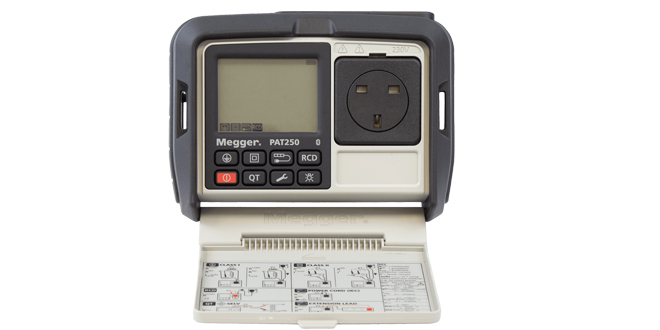
If you’re responsible for electrical safety, one of the first questions you’ll face is how often should I test portable appliances?
As Steve Marsh, regional marketing communications manager at Megger, explains, the answer isn’t one-size-fits-all and depends on a range of factors – from the type of equipment to how it’s used and where it’s located.
There’s no legal requirement that says you must test every item annually. Instead, the IET Code of Practice for In-Service Inspection and Testing of Electrical Equipment recommends a risk-based approach. That means deciding on test intervals based on how likely equipment is to develop a fault – and how serious the consequences could be if it did.
What should you base it on?
Your test frequency should be based on a risk assessment. Here are some of the key factors to consider:
- The type of equipment, for example, Class I, Class II, IT or fixed appliances.
- How often the equipment is used.
Who uses it, for example staff, students or public.
- The environment it’s used in, for example, office, construction site, kitchen, etc.
- Its history – has it failed before? Been repaired? Frequently moved?
Example test intervals
Every workplace is different, but here are some rough starting points for how often you might test various types of equipment:
| Environment | Equipment Type | Suggested Interval |
| Office | IT equipment | Every 2–4 years |
| Office | Kettles and toasters | Annually |
| Construction site | Power tools | Every 3 months |
| School | Portable appliances | Annually |
| Retail | Display lighting, extension leads | Every 1–2 years |
| Tool hire | All hireable electrical items | Before each hire |
A blanket annual testing schedule can be overkill for some equipment and and not enough for others. Instead, take time to assess what actually needs attention based on how and where it’s used.
Too often or not enough
Testing too often can waste time, resources, and budget, especially if you’re retesting low risk IT equipment every year for no clear reason. It also creates unnecessary admin work and adds strain on teams already managing multiple responsibilities.
Not testing often enough, on the other hand, carries real risks. Faulty equipment can cause shocks, fires or data loss. If there’s ever an incident, an investigation may reveal you didn’t have a suitable testing strategy in place.
That’s why risk-based testing matters. You only test what you need, when you need to and your decisions are backed by logic, not guesswork.
How to record (and justify) your test intervals
Once you’ve decided on test intervals, document your reasoning. This isn’t just best practice, as it helps you stay audit-ready. Things to record might include:
- The type of equipment and its electrical classification
- The operating environment
- Who uses it and how often
- Any history of failure, damage, or repair
- Visual condition at the last check
With this information saved, you can explain your choices to auditors or insurers and adjust your plan as things change.