Achilleas Georgiou, Heat Pump Expert at Mitsubishi Electric, looks at the opportunities for installers fitting heat pumps:
With almost 80% of UK homes built before 1980, the country’s ageing housing stock presents one of the biggest opportunities for decarbonisation – and for installers.
Existing homes account for more than a quarter of the UK’s energy consumption, while the majority still rely on gas or oil boilers for heating and hot water.
As demand for low-carbon heating continues to grow, installers are uniquely positioned to help homeowners future-proof their properties while supporting the UK’s decarbonisation journey. Heat pumps are rapidly becoming the preferred solution, and advances in technology are making them easier than ever to install in both modern and older homes.
A growing opportunity for installers
Heat pumps offer a highly efficient alternative to traditional fossil fuel heating systems, typically delivering around three units of heat for every unit of electricity consumed. Combined with increasing consumer awareness and government support, the retrofit market represents a significant opportunity for heating professionals.
Modern systems such as Mitsubishi Electric’s Ecodan R290 are helping installers overcome many of the barriers traditionally associated with heat pump installations. Designed to deliver high flow temperatures by using natural R290 refrigerant with an ultra-low Global Warming Potential (GWP), Ecodan R290 provides an effective low-carbon solution without compromising on performance.

Making heat pump installations simpler
One of the most common misconceptions among homeowners is that older properties are unsuitable for heat pumps. This often stems from concerns around extensive retrofit work, radiator replacements and pipework upgrades.
However, high-temperature heat pumps such as the Ecodan R290 operate effectively in a wide range of property types, including older homes, social housing and new-build developments.
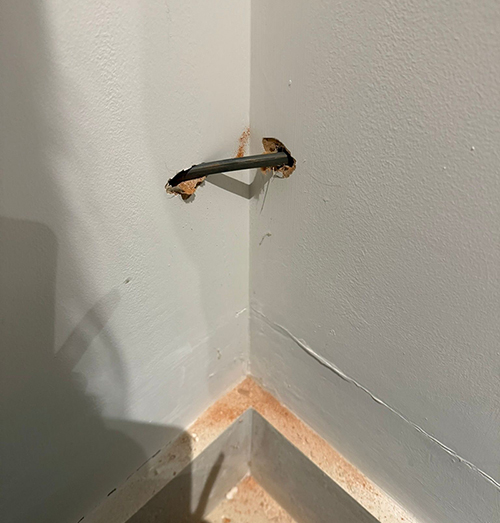
Crucially, research has demonstrated that many existing heating systems featuring legacy microbore pipework can remain in place when the system is correctly designed and commissioned. This can significantly reduce installation time, minimise disruption for homeowners and lower overall project costs.
Proven results
The potential of this approach has already been demonstrated with retrofit projects in the social housing sector.
Sovereign Network Group, which manages more than 84,000 homes, has successfully trialled the installation of high-temperature heat pumps in properties with existing microbore systems as part of its decarbonisation strategy.
The project showed that installations could be completed in under three days on average when existing pipework was retained, reducing installation times by around 40%. Alongside lower installation complexity, the homes also benefited from reduced operating costs and improved energy efficiency.
Why Ecodan R290?
For installers looking to expand their heat pump offering, the Ecodan R290 offers may key benefits. Including:
- High flow temperatures suitable for many retrofit applications.
- Natural R290 refrigerant with an ultra-low GWP of 0.02.
- Compatibility with a wide range of existing heating systems.
- Reduced need for extensive property upgrades in many installations.
- Backed by Mitsubishi Electric’s technical expertise, training and support.
Looking ahead
The transition to low-carbon heating is gathering pace, and installers will play a central role in delivering it. While the UK’s ageing housing stock has often been viewed as a challenge, modern heat pump technology is proving that retrofit projects can be completed quickly, efficiently and with minimal disruption.
Solutions such as the Ecodan R290 are helping to remove barriers to adoption, creating new opportunities for installers while delivering energy-efficient, future-ready heating for homeowners. As the demand for sustainable heating continues to increase, now is the time for installers to embrace heat pumps and help drive the UK’s low-carbon future.