Amendments to the Building Regulations back in 2005 effectively made condensing boilers compulsory for both new-build and retrofit installation. Paul Greengrass – Business Development Manager for Heating products at Pump House – explains the challenges and solutions for routing and disposing of boiler condensate.
Typically, a 24kW boiler will produce around 1.7 litres of condensate per hour – if running at full rate for the hour. So, depending on running hours, boiler output and system setup, annual volumes of 600 to 1200 litres of condensate could be produced.
Many boilers include a siphon which will dispose of around 100ml of condensate at a time. This will help reduce any constant dripping which will exacerbate freezing. Typically, the siphon will activate between 6,000 and 12,000 times a year.
For installers, there is plenty of guidance in both the latest revision of BS 6798: 2014 and boiler manufacturers’ instructions on the size of pipe and connection of condensate pipe
to existing pipework.
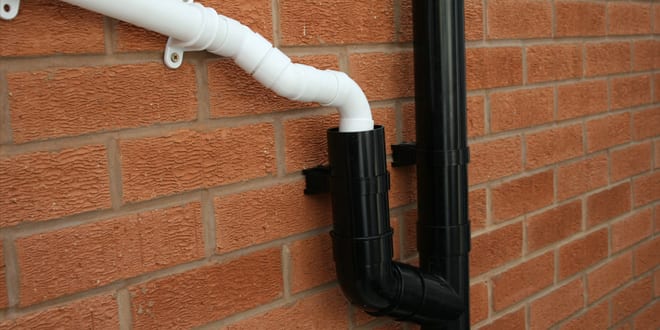
Connecting to external pipework was really defined as a last resort for use in exceptional circumstances when internal connection is not viable. However, this exception has – at times – been the rule with some housing associations, resulting in more than 60% of UK housing association condensate pipes being run externally.
The impact of such high levels of external pipe runs has created serious problems during extended periods of sub-zero temperatures in winter months. The optimum solution to avoiding freezing is to connect the condensate drain from the boiler to an existing internal sink, washing machine, bath, shower waste pipe or soil pipe.
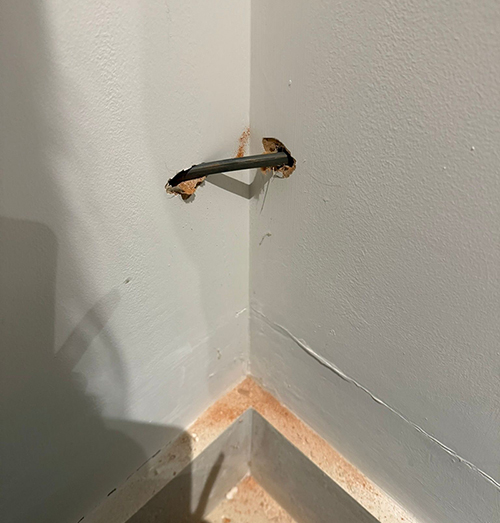
If immediate access to the internal drain by gravity is not available, fitting a boiler condensate pump can offer a number of advantages, including increased installation flexibility and an internal connection.
Retrofitting options
When existing installations have external runs that have the possibility of freezing, there are a number of options:
• Redirect the pipe work and route internally by gravity
• Redirect the pipe work and route internally using a condensate pump
• Fit a Boiler Buoy bypass valve on internal pipework
• Increase pipe size to at least 32mm and insulate with external grade PVC coated insulation
• Fit trace heating kit and insulate with external grade PVC coated insulation
Installation products and options
The resulting chaos caused by extended sub-zero temperatures with heating systems locking out has resulted in a plethora of new options when external runs are the only practical option. The cost and effectiveness of these solutions have been equally wide and varied.
A Boiler Buoy bypass valve is a very low cost solution that incorporates a red ball to indicate when the pipe becomes blocked and an internal bypass valve that can be switched to allow the boiler to keep working during
the cold spell.
Opting to increase the size of existing pipework to 32mm and using a PVC-coated insulation can provide a reasonable level of mitigation and a moderate reduction in the risk of freezing.
It is important to cover all external pipe because any exposed sections will be a weak link, especially bends and connectors.
The installation of a condensate pump can provide greater opportunity to connect the boiler condensate pipe to an existing internal waste pipe (sink, shower, bath or internal soil pipe) within the property, which can help reduce any risk of freezing pipework.
The pump is typically only on for around 20 to 40 seconds at a time, with annual run times of only 3 to 4 hours resulting in an associated electrical consumption of around 200 to 300 watts per annum.
Trace heating is a higher cost solution and has an electrical running cost impact to the householder (4m length can be up to 25kW per annum). It is important to remember that trace heating still requires the pipe to be insulated (there is not point having an electric blanket in the winter without a duvet).
The quality of the external stats on trace heating kit is important. The lower end products have low quality electronic components, while the high quality versions – such as Frost Sentry – have IP65 rated housings and robust electrical components.
Insulation advice and correct specification
The correct grade and thickness of insulation is also very important. The standard grey and silver coloured foam insulation, which is commonly available through most plumbing merchants, is for internal use only as it is not weatherproof or waterproof. Soggy insulation will freeze around the pipe making freezing condensate worse.
One of the changes to BS 6798: 2014 was to define the type of insulation to be used on external pipework – this should be a weatherproof type with a PVC coating.
The use of the PVC-coated weather/ waterproof type (19mm thick is recommended) importantly provides an appropriate water vapour barrier and weather resistance, and the PVC coating provides added strength and UV protection. An alternative option is to use an external grade plastic trunking, which not only protects the insulation but provides a professional-looking finish.
Soakaway imperatives
The use of a soakaway not only provides a drain outlet but, more importantly, provides neutralisation. BS 6798 calls for a 400mm deep hole with a 300mm diameter and a preformed plastic drain pot. If installed correctly, the soakaway should include around 25kg of lime chippings to provide both adequate drainage and neutralisation. A Geotextile membrane liner is also recommended to prevent soil and root ingress into the soakaway.
The pipework to a soakaway should be treated in the same way as other external pipe and insulated accordingly.
In preparation for the forthcoming winter, installers can hugely help their customers by ensuring that condensate is being correctly dealt with in their properties. By taking the time to check the current installation now, potential problems can be identified and eliminated – before they have the chance to cause problems when heating is most required.