Chris Goggin, COO at Rinnai UK, argues that the commercial heating industry needs a transparent and consistently applied method for predicting whole-system Seasonal Performance Factor – and that there’s no time like the present to bring the industry together.
A high-performing heat pump does not automatically make for a high-performing heating system. That sounds obvious enough, yet the industry still relies heavily on product-level performance data when making decisions about systems that are far more complex. Pumps, controls, storage losses, back-up heating and other auxiliary loads all affect how much energy an installation will ultimately consume. If we want clients to make informed decisions about energy use, running cost and carbon, we need an independently credible way of assessing the system as a whole before it is installed.
This is not an argument against SCOP. Seasonal Coefficient of Performance remains a valuable metric for comparing heat pumps. It estimates seasonal heat pump performance using standardised test and climate assumptions, while COP measures performance at a defined operating point. Both undoubtedly have an important role to play, but the problem comes when a product-level figure is treated as an indication of how the complete installed system will perform.
A client does not pay for the heat pump compressor in isolation. They pay for every unit of energy consumed by the installation. A heat pump with an impressive SCOP can still sit within a poorly performing system if, for example, it has been incorrectly sized, requires significant back-up heat, is operating at higher temperatures than anticipated or is accompanied by energy-intensive pumps and controls.
And that is where Seasonal Performance Factor, or SPF, becomes useful. At its simplest, SPF compares useful heat delivered with the energy consumed over a defined period and within a clearly stated system boundary. Exactly what is included depends on where that boundary is drawn.
There is also an important distinction between predicted and measured SPF. Predicted SPF is a pre-installation estimate based on assumptions about the proposed system, its operating conditions and the environment in which it will work. Measured SPF is established from the actual heat output and energy input of the installed system over an operating period.
The former can help consultants and clients make better decisions before equipment is specified and installed, while the latter tells us what happened once the system was actually in use.
We are not starting from scratch
There are already recognised foundations for calculating SPF in the market, and some incredibly valuable work has already been done by the likes of SEPEMO.
The SEPEMO framework sets out a series of system boundaries running from H1 to H4. At H1, the focus is essentially the heat pump refrigeration cycle. H2 broadens the boundary to include the heat pump and equipment required to make use of the source energy. H3 adds back-up heating. H4 extends the assessment to the complete heating system, taking in the wider energy consumption associated with the installation.
Each boundary is valid for the purpose it serves, so problems arise when an SPF figure is presented without making clear which boundary has been used, or when two figures calculated to different boundaries are compared as though they measure the same thing.
For commercial systems, there is an additional complication, because predicted SPF is a model, and any model is only as credible as the information and assumptions that go into it. For instance, weather data will affect the result. So will the load profile, flow temperatures, storage losses, control strategy, back-up energy and the electricity consumed by pumps and other auxiliary equipment. On a domestic hot water installation, for example, the temperatures involved and the way stored water is managed can have a major bearing on energy consumption.
None of this makes SPF a poor metric, but it does mean we need to be clear about what has been calculated and how.

The missing piece is consistency
Existing SPF frameworks give the industry a valuable starting point, but the UK commercial heating sector does not yet have one consistently applied, independently accepted method for predicting and comparing whole-system SPF before installation.
At present, two competent designers could assess the same proposed system and arrive at different SPF figures because they have used different weather data, assumptions or system boundaries. Both calculations could be technically defensible in isolation, and yet they would be difficult for a client to compare.
An SPF figure without a declared boundary and transparent assumptions therefore has limited value. It can give the impression of precision without necessarily giving the customer a like-for-like comparison.
A common methodology would need to go further than simply agreeing an equation. It would have to define the system boundary, calculation period, useful heat output and energy inputs. It would need clear rules for weather data, auxiliary loads and back-up energy, along with an agreed approach to the assumptions made where project-specific information is not yet available.
Reporting would matter, too. Anyone reviewing the calculation should be able to see what has been included, what has been excluded and which assumptions have been made. Most importantly, the method needs to be repeatable. If several competent consultants are given the same project data and assumptions, the industry should be aiming for results that are genuinely comparable.
That does not mean the eventual figure will perfectly predict what happens after installation. Buildings are occupied and operated by people, and real-world conditions will always differ from a model to some extent. Predicted SPF should therefore sit alongside post-installation measurement.
Better information at the design stage
The purpose of all this is not to create another rating to put on a data sheet. Whole-system SPF modelling can help expose design decisions that might otherwise be hidden behind a strong product-level performance figure. If a proposed design depends heavily on electric back-up heating, for example, the effect should be visible. The same is true of storage losses, high operating temperatures or auxiliary loads.
That gives the consultant and client a better basis on which to compare options before money is committed. It also means SPF should not be presented as something that automatically cuts energy use, running cost or carbon. A calculation cannot do that, but it can do is show where energy is likely to be consumed and help designers understand the consequences of the choices they are making.
Developing a credible whole-system methodology will require input from across the sector, not a solution created by one manufacturer, so we are not asking the industry to accept a Rinnai methodology. Consultants, engineers, component manufacturers, industry bodies, building operators and independent technical specialists all need a voice.
Rinnai will, however, take a first step on 25th November, when we host an independently chaired roundtable at elementalLONDON. The aim is to identify where there is already agreement, understand the technical barriers and start building a practical route towards a method the industry can apply consistently and clients can use with confidence.
Sign up to the CPD here: https://www.rinnai-uk.co.uk/training/cibse-cpd-training-enrolment
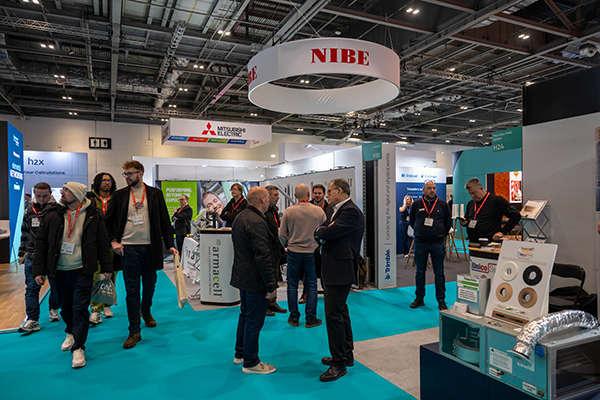
elementalLONDON heads to Excel on 25-26 November. Get your FREE tickets today: elemental | Home page – elemental
Continue reading — it's free
Register for free to unlock exclusive Installer content.