Ratio EV is a UK-based manufacturer of intelligent EV charging solutions that are designed to be sustainable, accessible and reliable. Rob Shepherd caught up with the company’s General Manager, Tom Jennings, to learn what sets Ratio EV apart and to get his take on some of the key challenges shaping the EV charging industry.
RS: Give us a bit of background about Ratio EV. What’s the story behind the company?
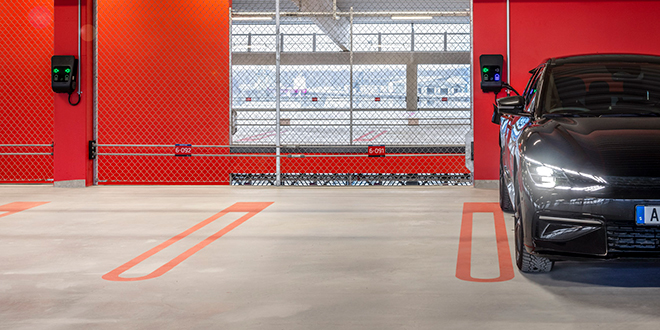
TJ: Ratio EV was created through a collaboration between FW Thorpe in the UK and Ratio Electric in the Netherlands. The company now designs and assembles smart, robust EV chargers at its Redditch facility, which are all fully Office for Zero Emission Vehicles (OZEV) approved and tailored to UK homes, businesses and public spaces.
My own journey began at FW Thorpe with Thorlux Lighting, working in the engineering team. I was challenged to take a proven lighting product and adapt it into what has since become the io7 – our flagship integrated charging bollard. From that point Ratio EV has grown rapidly and the rest, as they say, is history.
RS: What differentiates your EV charging point technology in terms of design, charging speed and longevity?
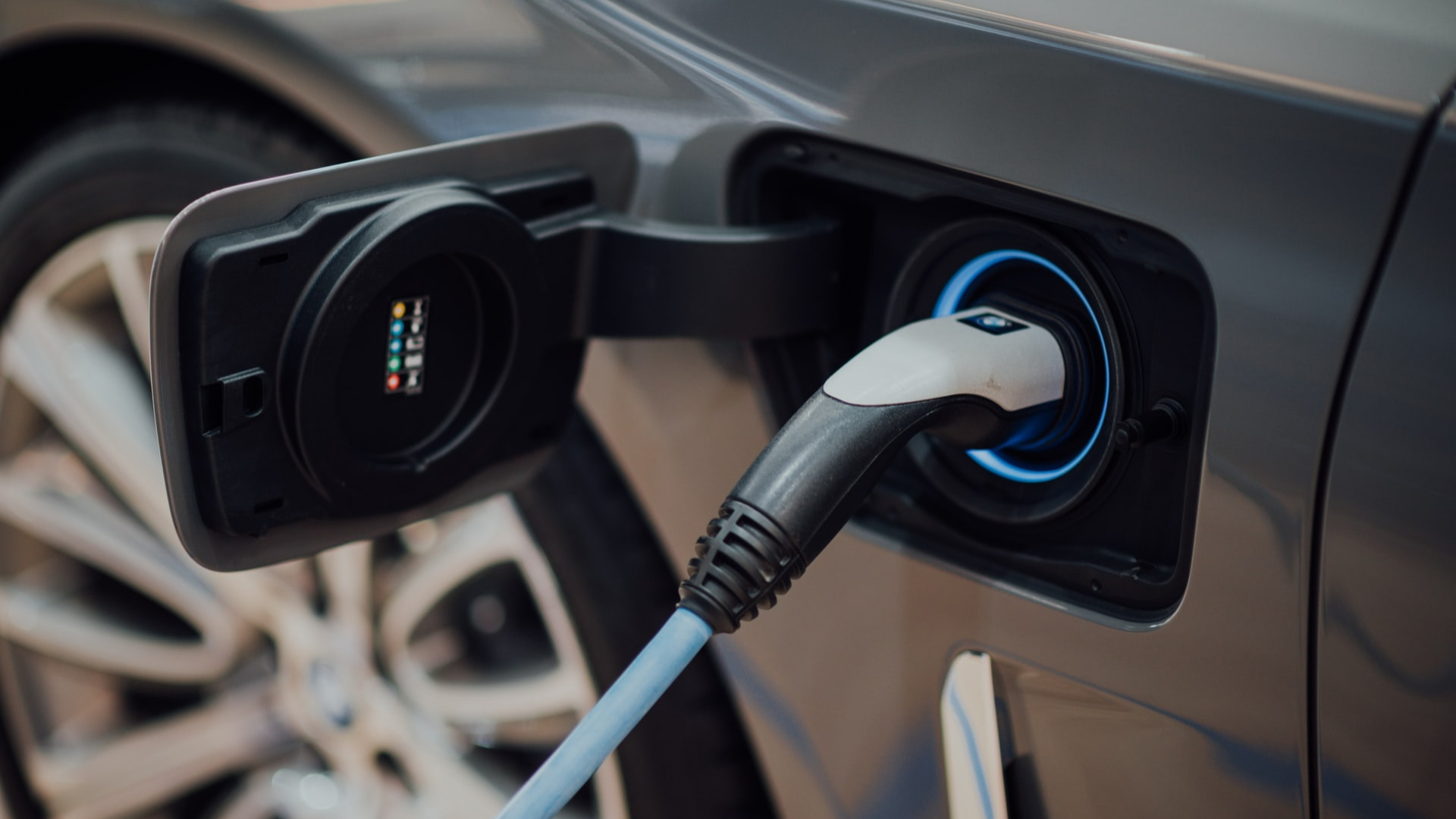
TJ: Durability and practicality sit at the heart of every product we make. Our chargers use aluminium housings, carry IK10 impact ratings, have IP66 protection and are built to withstand years of use in car parks, depots and other high traffic environments.
Models such as the io7 and io8 go one step further by combining EV charging with integrated lighting. This dual purpose approach reduces the amount of street furniture, cuts installation costs and delivers a cleaner, safer and more attractive finish.
Our focus is on AC charging at 7.4 kW and 22 kW – the sweet spot for destination charging. Hotels, golf clubs, office car parks and retail spaces are where EVs spend most of their time connected, and it’s these settings where reliable and efficient AC charging really makes sense.
Sustainability is also central to our brand and we design every charger with circularity in mind. Our products are fully repairable, which means they’re not only better for the environment but also deliver a lower total cost of ownership.
RS: How are your EV charging systems designed to be scalable and adaptable to future increases in EV adoption, higher charging speeds and heavier network usage?
TJ: Future proofing is critical and every Ratio EV unit is designed to grow with demand. Thanks to dynamic load balancing, up to 32 chargers can share one electrical supply intelligently, preventing overload and avoiding expensive grid upgrades. On the software side, our Open Charge Point Protocol (OCPP) based back office gives businesses the flexibility to add new chargers, manage billing and integrate solar generation or battery storage.
The system is modular and flexible, allowing electricians to expand a site gradually without redesigning the whole installation. This approach makes Ratio EV chargers especially attractive to workplaces, commercial landlords and councils, as these are organisations that may start small but want confidence that their investment won’t be obsolete in a few years.
RS: What upcoming innovations are you most excited about and how do they align with the company’s long-term vision?
TJ: We’re particularly proud of the io7 and io8, which combine charging with lighting in a single bollard. This innovation saves space, improves safety for users and brings a modern design aesthetic to public spaces.
We’re also investing heavily in the future of public charging. That means ensuring our solutions are robust enough to withstand all UK conditions, fully accessible through PAS 1899 compliance and flexible with multiple payment options.
Our long-term vision is straightforward. EV charging should become a seamless, sustainable part of everyday environments. Whether it’s a workplace car park, a hotel forecourt or a village high street, charging points should feel as natural and reliable as other utilities.

RS: The general advice is never let your EV battery sit at 100% charge and keep it in 20-80% charge range. What’s your take on this?
TJ: As a rule of thumb, keeping a battery between 20-80% charge does help extend its life. But drivers shouldn’t panic – topping up to 100% for a long journey is fine. Some vehicles, especially with LFP batteries, even recommend regular full charges. The best advice is to follow the manufacturer’s guidance and use smart chargers to set daily limits with the option to override when you need the range.
RS: How are you addressing the current imbalance in charger power levels, particularly the low proportion of rapid (50–149 kW), and ultra-rapid (150 kW+) chargers in the UK network?
TJ: The UK charging network is unbalanced. We have plenty of fast AC chargers in the 7-22 kW range but far fewer rapid (50–149 kW) or ultra-rapid (150 kW+) stations. That imbalance limits long distance travel convenience and puts pressure on certain parts of the network.
Workplaces and public destinations, where cars sit for hours, don’t need ultra-rapid charging, they need reliable AC solutions. At the same time, we support industry and government calls for more investment in high powered DC hubs on strategic road networks, backed by grid upgrades to make them viable.
RS: What strategies need to be put in place to ensure a more even distribution of EV charging points, especially in underserved regions outside London and the south-east?
TJ: Right now, London and the South-east have far more chargers than regions like the Midlands, the North and rural areas. The solution is threefold – targeted funding for ‘charging deserts’, more use of dual purpose solutions like lamp-post or lit bollard chargers, and encouraging large employers and councils outside the capital to invest in workplace and public charging. Smart load management also makes smaller town rollouts viable without major grid reinforcement.
We’re now seeing targeted initiatives such as the new Rural EV Fund in Scotland, which is designed to improve access to charging in remote and island communities. Programmes like this are a model for how investment can be directed to areas that would otherwise struggle to attract private operators, helping to ensure the transition to electric mobility is fair and inclusive across the whole of the UK.
RS: What opportunities are there for electrical contractors in the installation and maintenance of EV charging points?
TJ: This is a golden era for electrical contractors. Work ranges from domestic installs under OZEV grants to commercial multi-charger projects with back office set-up, to jobs integrating solar and load management, while ongoing maintenance offers recurring revenue. Electricians who build competence in OCPP networking and smart energy systems will be especially well positioned as businesses demand turnkey solutions.
RS: Which markets or customer segments are your primary focus for the next few years, and why?
TJ: Workplace, public and destination charging in offices, hotels, retail parks and car parks remain a priority, as does on-street charging for councils. The biggest growth opportunities lie in commercial and public realm projects.
These are precisely the segments where Ratio EV’s blend of smart load balancing and integrated lighting creates real value. They’re also the markets where electricians can have the most impact – designing, installing and maintaining systems that will serve communities for decades to come.
Contributors

Rob Shepherd (author)
Rob is Consulting Editor for InstallerELECTRIC. He is a well-respected journalist with a strong history in the electrical sector.