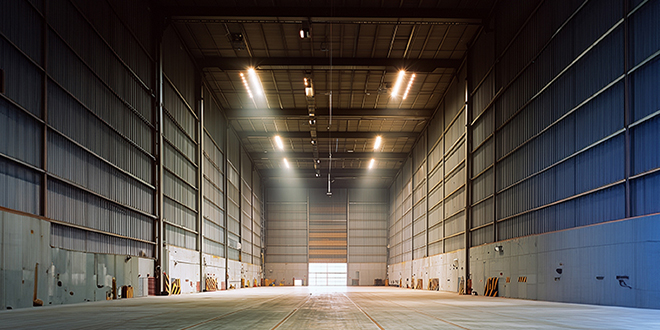
With its lower energy use, reduced carbon emissions, longer lifespans and improved light quality, LED lighting is transforming industrial and manufacturing facilities. Rob Shepherd explores how electrical contractors are in the perfect position to deliver efficiency, savings and wellbeing through strategic retrofits in these environments.
Over the last decade or so LED lighting has evolved from a niche solution to a dominant technology that benefits almost every sector. Nowhere is this shift more evident than in the UK’s industrial and manufacturing facilities, where efficiency, safety and cost control are paramount.
Growing concern
LED adoption has accelerated dramatically and is expected to account for 85-95 per cent of all lighting sales by 2030. In the UK, the transition is already well underway, with data from the Carbon Trust indicating that lighting upgrades using LED technology can reduce energy consumption by 50-80 per cent compared to older fluorescent and discharge lighting systems. For electrical contractors, this shift represents both a technical challenge and a major business opportunity, as facilities seek expert guidance on design, specification and installation.
LEDs have created a step change in lighting performance, combining advanced optical control, intelligent dimming and sensor integration with increasingly competitive upfront costs. Once perceived as prohibitively expensive, LED luminaires have dropped in price by over 85 per cent since 2010, making them the economical choice for most applications. The payback period for an optimised LED retrofit in a 24/7 manufacturing environment is typically under five years, and this can often be significantly less when smart lighting controls are included.
Culture shift
According to the UK Department for Energy Security and Net Zero, lighting accounts for 20% of electricity use in industrial and manufacturing facilities on average. This makes it one of the most effective areas to target for savings.
Yet despite the obvious advantages, not every facility has made the switch to LED lighting. One of the perceived barriers is the belief that a full infrastructure redesign is costly and disruptive. However, with careful planning, phased implementation and close coordination with operational teams, upgrading can be done smoothly without compromising production.
Electrical contractors play a critical role here, by working with facilities managers and shift supervisors to develop clear programmes of work. Targeting low ceiling areas or storage zones first can deliver early wins and build confidence before tackling more complex installations in high or hard to access spaces.
Smart planning
Industrial and manufacturing environments present unique challenges. Lighting layouts may have changed since their original design, production schedules can restrict access and some areas operate continuously. However, with strategic scheduling, upgrades can often take place during planned downtime or shift changes, while a phased approach allows contractors to align installation work with production cycles, thereby minimising disruption.
Reliability is another reason why they are increasingly popular. Quality LED luminaires offer extremely long lifespans, often exceeding 50,000–100,000 hours, with light output degrading at less than one per cent per year. This means that once installed, they become almost fit and forget solutions, drastically reducing the frequency of replacement and associated maintenance costs.
Spend and save
The financial and environmental benefits of LED technology are compelling. According to the UK government’s Net Zero Strategy, non-domestic buildings need to cut energy use by around 30 per cent by 2030 to stay on track for national emissions reduction targets. Lighting upgrades offer one of the fastest, most cost effective routes to achieving these reductions.
For facilities that run around the clock, these savings quickly add up. A medium sized manufacturing plant with annual lighting costs of £100,000 could save £60,000-£80,000 per year by switching to LEDs with intelligent controls. The resulting drop in carbon emissions also supports compliance with schemes such as Streamlined Energy and Carbon Reporting (SECR) and strengthens corporate sustainability credentials.
Beyond simple efficiency gains, LED systems enable precise control over how and when lighting is used. Many industrial spaces have long operational hours but relatively low occupancy, particularly storage and warehouse areas. Integrating LED luminaires with presence detection, daylight sensors and building management systems allows lighting to respond dynamically to real conditions. Daylight harvesting can adjust artificial lighting based on available natural light, while zone by zone or even luminaire by luminaire control optimises usage and enhances savings even further.
Putting people first
Lighting quality is not just a matter of efficiency, as it has direct implications for workplace safety and employee wellbeing. UK regulations state that lighting should be ‘suitable and sufficient’, while guidance from the Health and Safety Executive (HSG38) and the Chartered Institution of Building Services Engineers (CIBSE) sets minimum recommended lighting levels. For example, industrial and manufacturing facilities should have 150-200 Lux at floor level and 300 Lux in task areas.
Poor lighting can cause headaches, eye strain, fatigue and reduced concentration – all of which impact productivity. A Gensler survey found that 90% of employees believe their workplace environment affects their attitude to work and, given that people in the UK spend around 90% of their time indoors, investing in human-centric lighting that supports health and comfort should be considered a business imperative. LED lighting provides bright, uniform illumination with excellent colour rendering, improving visibility and helping to prevent accidents.
Avoiding the pitfalls
While LED technology itself is generally robust, not all products are created equal. Premature failures, poor lumen maintenance or exaggerated performance claims can undermine savings and return on investment. Put simply, choosing low cost, low quality luminaires may seem attractive initially but the approach often leads to higher lifetime costs and operational headaches.
To mitigate this risk, electrical contractors should work with reputable manufacturers that provide verifiable data, comply with UK and European standards, and offer comprehensive warranties and aftersales support. In environments such as food manufacturing, ingress protection (IP) rated luminaires that withstand high pressure washdowns and dust ingress are essential. Paying careful attention to specification ensures the lighting suits the application and delivers the intended performance over the long-term.
Moving on up
Making wholesale changes to a building’s lighting infrastructure when it is operational on a 24/7 basis might seem daunting. However, a strategic approach can ensure a fast and efficient installation with minimal disruption to day to day activities. With industrial and manufacturing facilities all trying to lower the amount of money they spend on energy, while at the same time reducing carbon emissions and enhancing employee wellbeing, LED lighting is the right technology at the right time. Electrical contractors who can provide design expertise, phased installation strategies and trusted product recommendations are well positioned as valuable partners in this transition.
Contributors

Rob Shepherd (author)
Rob is Consulting Editor for InstallerELECTRIC. He is a well-respected journalist with a strong history in the electrical sector.