Jen Cassidy, recently installed as the CEO of bathrooms giant Bristan, part of the Bristan Group, is in no doubt that as a woman at the top of the industry, she has a responsibility to help drive change. She tells Andrew Gaved how.
Jen Cassidy is the first to admit that she didn’t have ambitions to join the bathrooms industry when she left school, let alone to become one of its leading figures.
“I left school with slightly disappointing A levels and decided not to go to university but instead worked my way through a variety of marketing jobs, from utilities to financial services,” she says, “but my boss at the telecoms group NTL got a job as Marketing Director at Plumb Centre and he encouraged me to apply for a vacancy there. And almost from the moment I arrived, I fell in love with it.”
The bathrooms business has a habit of drawing people in, and despite leaving it twice, Jen is now very much back – and the Bristan business, along with sister company Heritage Bathrooms, is giving her plenty to get her teeth into.
“We are really proud that we design products for the UK market. We listen to UK installers and over the years we’ve come up with some really great innovations that make their lives easier – products such as our wall mount valves or our Easyfit kitchen tap, have come about from our design engineers being out in the market, understanding the installers’ pain points and then fixing those pain points.”
The installer customer and the end consumer are very much key to the Bristan thinking – and there is currently a major project under way to understand them in even more detail.
“This research is the biggest project we’ve ever done in terms of understanding what that end-customer base looks like. And that’s going to spread into every area of our business,” Jen says. “We are making a shift from what we consider ‘customer service’ to ‘customer experience’. We are exceptional at customer service, but we have some work to do around customer experience, the real end to end journey from the warehouse to service to product development.
I think that is really exciting. It’s a long time since I’ve been in a business where it really puts the customer at the heart of everything and all of our decisions come off that.”
Bristan has been working with a company called Palm AI on how it communicates with the end customers, understanding what they want to hear and pulling different data sets together to inform and create content and imagery that’s meaningful to different customer groups – rather than a one-size-fits-all approach.
“I think people are fighting against the trend of technology to homogenise everybody,” she says, “and instead they want to be treated as individuals.”
‘People make Bristan’
Bristan sets a high bar for customer service, she notes – not least the fact that it lays claim to being the pioneer in the sector for next-day delivery. “It was 20 years ago that we introduced it. It really disrupted the market and that’s where we want to get back to again. I think we’ve got exceptional service levels, but we need to ask ourselves ‘what’s next?’”
That high bar is demonstrated with a Trustpilot rating that currently sits at an impressive 4.8, Jen adds. And, while quite a few companies in this industry talk a good game about their service levels, there can’t be that many where the customers are so grateful that they donate to the staff Christmas lunch, as Bristan’s customer service team experienced last year.
“To borrow someone else’s phrase, ‘People make Bristan’,” Jen says, “and for me that’s what makes the company really special. There’s a warmth to the organisation, a care to the organisation, that I haven’t experienced anywhere else. We’ve got 13 people celebrating 25-years-plus with us this year. You don’t build a culture overnight. But I think it’s very much about the right people joining too. Technical skills are one thing, but for us it is really ‘Are these ‘people people’? I felt it from the minute I walked in the door.”
The focus on people keeps coming back in the interview – whether that is within the company or its customers, or indeed, industry inclusion, which we will come to.
One of Jen’s fears is the commoditisation of the industry, she says, and this is clearly something that she is aiming to tackle head-on:
“It’s no secret that we lost our way a bit from a product point of view, with very little investment for a long time. We have a measure called ‘vitality’, which is the percentage of sales that come from products launched in the last three years. When I joined four years ago it was 2% and heading down, which is a terrifying figure. Three years later, we’re now well into the double figures, but we don’t hide from the fact that we have been playing catch-up. I’m incredibly excited that we’ve just appointed a Chief Product Officer, Mark Joynson-Bickerstaff, who was one of the founding members of Dyson, so a real product engineer at heart. So I think that makes a statement about where we’re heading from here.”
It also means the design engineers are back to where they should be, she adds, sitting in front of our end customers, solving those pain points.
“We are seeing more and more smaller entrants come in and it’s our job to keep up,” she notes, “I think we are a reasonably big organisation now, with £70 million turnover and 272 people. They are agile, they’re able to invest in things that maybe we haven’t historically. Content is a good example. They don’t have the same cost base that we do, but equally we’ve got huge investment in R&D and design and technology, so it’s really important that we stay at the front from a product point of view, but also from a service point of view as well.”
And Bristan’s focus on service is not just lip service, Jen emphasises:
“You hear a lot out there around 20-year guarantees and the like. The difference is ours is pretty much ‘no quibble’. If you have the proof of purchase, we are going to fix things for you. And for that first year, we even guarantee the labour – we have our own field service engineers who will go out and replace that product. We honestly don’t shout enough about it. We may have 17% market share, but that’s still 83% of people we need to go and educate about who we are.”
The need to educate
Consumer education is also important in another area where Jen wants to see change: water scarcity. “We support the Windsor Declaration as part of the Bathroom Association. But I genuinely did not understand the scale of the issue facing the UK before I went to that summit. We are going to be in water deficit by 2030. This is not just about an occasional hosepipe ban, this is the risk of food shortages; it’s businesses being denied licences; it’s houses not being built. And that scares me. There is not just a moral imperative to act, but a financial imperative too, because if the housing market suffers, then Bristan does too.”
However, she warns that there shouldn’t be too much focus on water-saving products: “Obviously that is important, but if somebody buys a water-saving product and then has a 20-minute shower, we are no better off. Yes, we’ve got to do more around innovation, but we have got to do more to help people understand the scale of the problem and what they personally can do to change.”
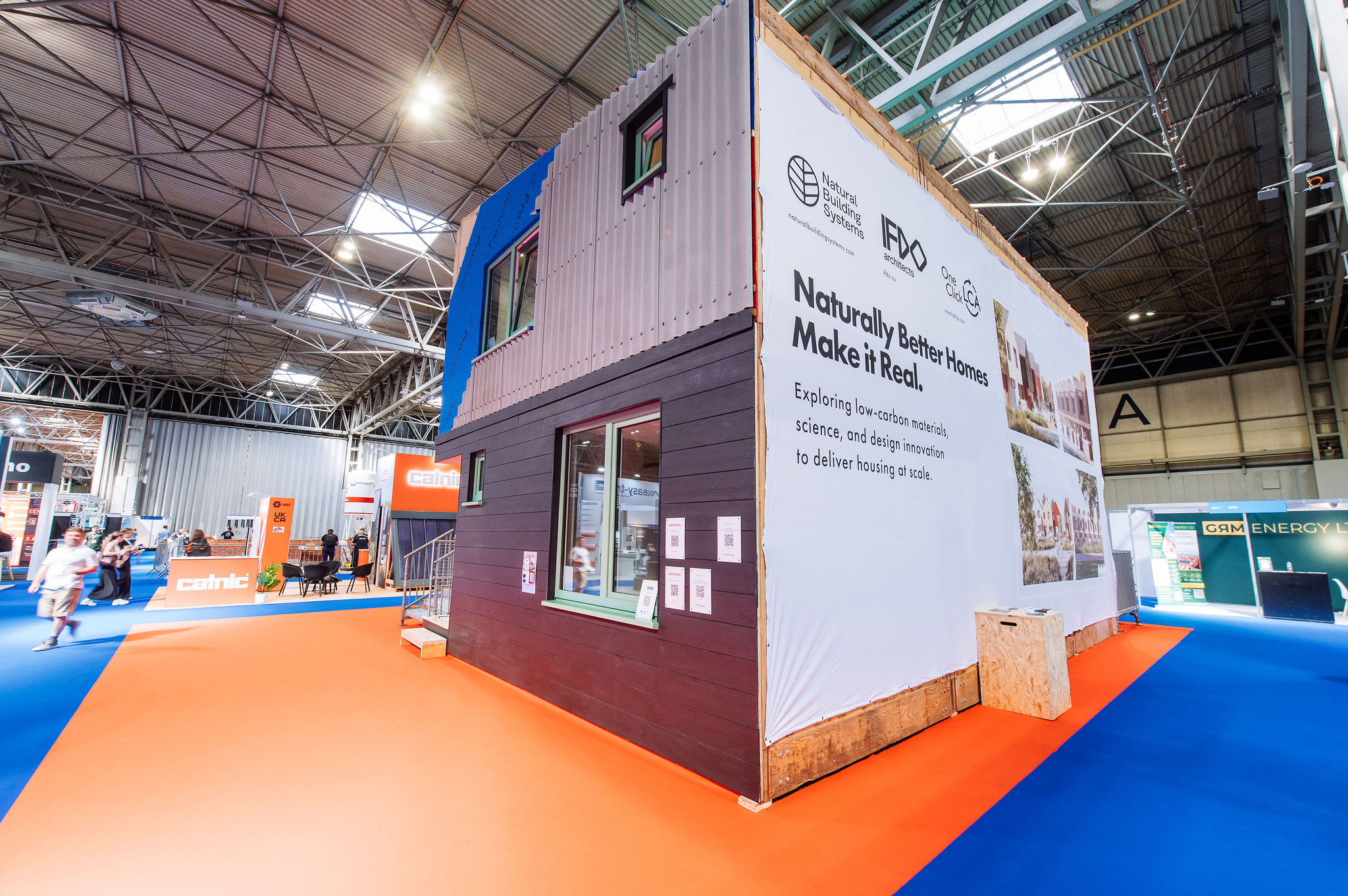
While there is clearly a lot of emphasis on the consumer in the world of Bristan, the company’s recent presence at InstallerSHOW (see picture below) demonstrates the key role it sees for the installer in the customer journey: “I think the installer is definitely key to all this because we’re well aware that whilst the consumer is increasingly choosing their own products, the bulk is still specified by the installer,” Jen says. “But I do think, ‘How many installers know the challenges that we face?’ So I think that still comes back to us raising awareness. The installer is absolutely key to us both in their own right and as the conduit to the consumer. But let’s not forget also that installers all have bathrooms themselves, and they have families and friends.”

And talk of the role of the installer comes neatly back to the reliability factor, she adds: “If you fit Bristan, you don’t have to go back to that job as an installer – because the consumer can call us and we’ll send an engineer out. The fact is, the installer’s time is best spent on new jobs, not fixing previous ones!”
Inclusion is a responsibility
Jen is also keenly aware that as a female leader in the industry, there is a responsibility that comes with it.
“I feel very strongly that I’m fortunate to be in this position and therefore it is my responsibility to help lift others up,” she says. She has put her words into action by joining the board of the Construction Inclusion Coalition, a group which was established to further diversity and inclusion in the wider construction industry. She says there is a clear motivation for action:
“This industry is facing a talent shortage, a labour shortage, and it is heading for a crisis,” she says, “and while 52% of the population is female, they are only 16% of the industry, which means we are missing out on a huge amount of talent. It’s terrifying how few women will consider the industry for a career. It is down to perception and I don’t think individual organisations can change that perception, but I do believe that collectively we can and should change it.”
A compelling attraction of both the CIC, and its Elevate Women Network are their focus on collaboration, Jen says. “I think it’s great, particularly within the bathroom sector, that we’re seeing more and more diversity at the top. But I genuinely believe that we can do more together. There are lots of organisations doing great work internally – we are one. We’ve just done our latest engagement survey and DE&I rates are 80% on the question of is it taken seriously? I’m very, very proud of that. But it goes way beyond that for me.”
Another reason for her involvement, she adds is that at Bristan, the company has the time and the budget to focus on inclusion, whereas there are many smaller companies that don’t. “At CIC we now have a whole library of resources. As a company we recently changed our menopause policy and we have published that policy on the CIC website. It means that any company can download it, put their logo on and implement it themselves.”
She enthuses that the Elevate Women’s Network, which she co-chairs with Maxine Cornelius, has proved a lasting experience: “We have on average about 50 to 60 people coming to each virtual session. They are an incredible uplifting environment. We’ll talk on a particular topic – we talked about work-life balance at the last one. In fact somebody said: ‘It’s not balance, it’s blend’, and there was a real outpouring of agreement around the room.”
Three areas of change
When it comes to what will make real change here, Jen points to three key areas:
“I think we don’t talk enough about the different roles that are accessible within the wider construction industry: whether that is procurement, marketing, sales, or finance, there are all these opportunities. There are some really basic things around how we think about recruitment, such as using inclusive language and imagery – all these things that are actually quite simple but easily overlooked. We’ve just got to story tell better. We have got to make people more visible. So people see somebody that’s like them in a position within the industry.”
She is also keen to see more meaningful allyship: “For International Women’s Day we ran some panels and we had a male ally on each of them. What does allyship really mean? It is about actually recognising when you need to invite people into a conversation. It’s about recognising and understanding the different challenges people face. And then from the leadership teams in particular, it is about championing change. It isn’t just about raising awareness.”
The third area is to help those that are in the minority to believe in themselves: “It is talked about a lot, but women too often won’t put themselves forward. We want to be overqualified before we apply for a role. Sometimes you forget you’re up against people that don’t feel like that,” she says. “I’ve said before that imposter syndrome is real. I still find it quite uncomfortable to say that I’m the CEO. Would I have gone for this role outside of this organisation? Probably not. I probably wouldn’t have had the confidence to do so. So how do we help with that? One way is with the mentoring scheme that we run through the CIC. I have just spent an hour with my mentee, who is in a different company. She can talk to me about things that she wouldn’t necessarily want to talk about to her direct line manager. The other way we can encourage it is by running initiatives like our Leadership Development Programme, which equips people with the skills they need to take the step up into senior roles.”
While our conversation has ranged across consumers, product innovation, installers and inclusion, there is a theme running throughout: embracing change: “One of the things I love about this industry is that it is constantly changing,” says Jen, “but the flip side of that we often don’t embrace that change fast enough.”
You can be pretty sure that during her tenure at the top of Bristan, Jen Cassidy is going to be addressing that.